
Union Apprenticeship Programs: Building Careers in the Trades
A four-year college degree costs the average American student around $110,000 in tuition and fees. A union apprenticeship costs zero. You get paid from day one, graduate debt-free, and walk out the other side with a credential that employers will fight over.
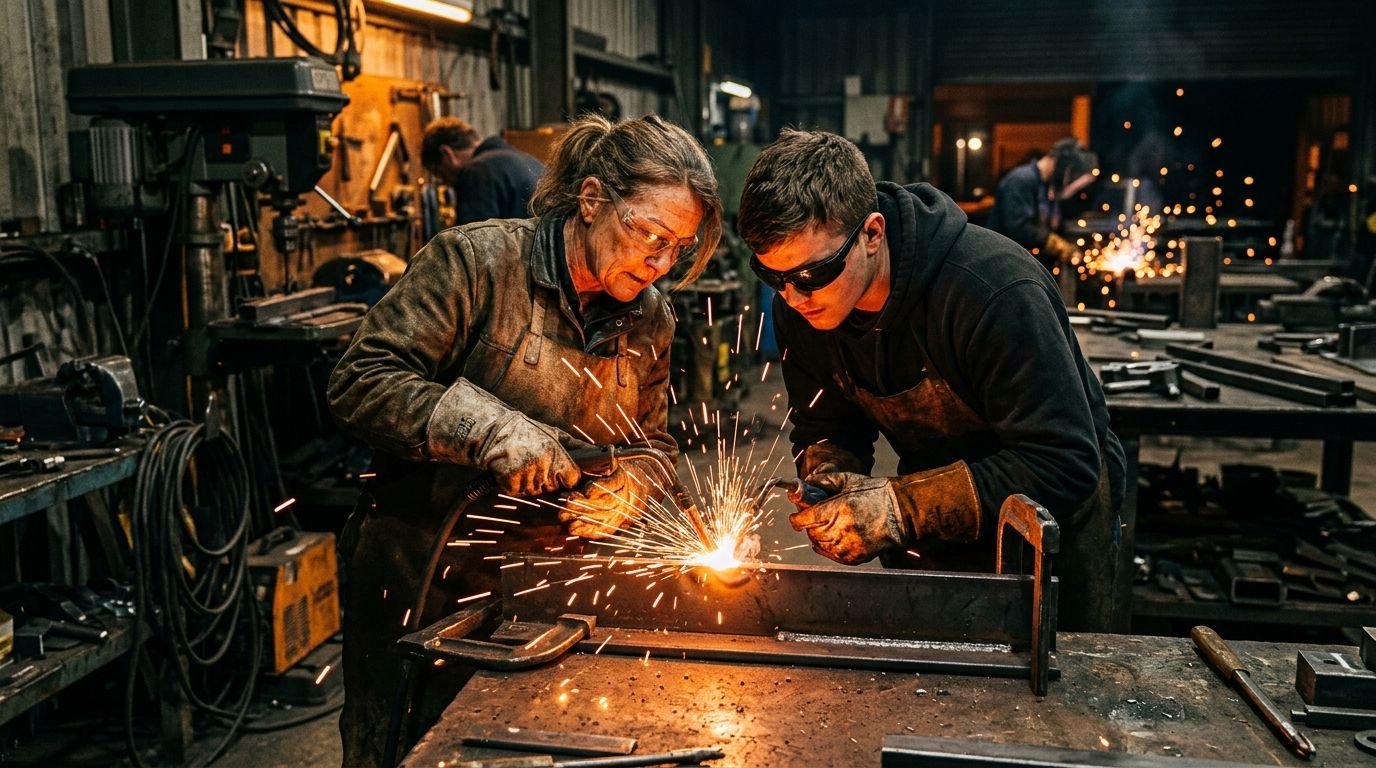
Union Apprenticeship Programs: Building Real Careers in the Trades
A four-year college degree costs the average American student around $110,000 in tuition and fees. A union apprenticeship costs zero. You get paid from day one, graduate debt-free, and walk out the other side with a credential that employers will fight over. And yet guidance counselors, parents, and policymakers still act like a bachelor's degree is the only respectable path to the middle class. That bias is expensive, and it's wrong.
I've spent the better part of my career writing about how workers build power and economic security. The more I dig into how skilled trades training actually works inside unions, the more convinced I become that these programs represent one of the most underrated career-building systems in the country. They're not a fallback. They're a blueprint.
What a Union Apprenticeship Actually Looks Like
If your mental image of an apprenticeship is some kid sweeping floors and fetching coffee, update it. Modern trade apprenticeship programs are rigorous, structured, and jointly managed by unions and employers working together.
A typical program lasts two to five years, depending on the trade. During that time, you're splitting your hours between paid on-the-job training and classroom instruction. Electrical apprentices learn residential wiring, commercial systems, solar arrays, and standby generators. Plumbing apprentices study code compliance, pipe fitting, and system design. Carpenters, ironworkers, elevator constructors, sheet metal workers, operating engineers: each trade has its own curriculum built around the actual skills employers need.
The key phrase there is "paid." You earn a wage from the first week. As you progress through the program and your skills increase, your pay goes up in scheduled increments. By the time you complete the apprenticeship and earn your journeyworker certification, you're making a full professional wage with benefits most office workers would envy.
The AFL-CIO maintains a directory of joint labor-management training programs across dozens of trades, from the Electrical Workers/NECA National Joint Apprenticeship Council to the Elevator Constructors National Elevator Industry Educational Program. These aren't fly-by-night operations. They're institutions with decades of track records.
The Numbers That Should Change the Conversation
Here's where the argument for skilled trades careers gets hard to ignore.
As of 2022, union households had more than twice the wealth of nonunion households. Ninety-five percent of union workers had employer-sponsored health benefits, compared to 68% of nonunion workers. These aren't aspirational goals printed in a recruiting brochure. They're measured outcomes for real people.
In Massachusetts alone, union programs account for 74% of all registered apprentices in the state. That concentration isn't an accident. It reflects the fact that unions bring structure, funding, and accountability that non-union programs often can't match.
And completion matters. Nationally, apprenticeship completion rates sit below 35%, according to the U.S. Department of Labor. But programs with strong support systems, mentorship, and wraparound services dramatically outperform that baseline. The difference between a program that graduates most of its apprentices and one where two-thirds drop out usually comes down to how well the sponsoring organizations support people through the hard parts.
This framing, popularized by leaders like Chrissy Lynch, President of the Massachusetts AFL-CIO, captures something important. We're not talking about a shortcut or a lesser option. We're talking about a parallel system of professional development that happens to skip the student debt.
Who Gets In: Diversity Is Improving, But There's Work to Do

The building trades have historically been dominated by white men. That's not a secret, and pretending otherwise doesn't help anyone. But the numbers are shifting, and union programs are a big reason why.
In Massachusetts, women now make up over 10% of union building trades apprentices. That triples the national average and represents a doubling since 2012. Programs like Women in Non-Traditional Employment Roles (WINTER) in Southern California and women-only apprenticeship readiness cohorts offered by the Ironworkers Union are creating deliberate on-ramps for women entering male-dominated job sites.
For people of color, the picture is similarly mixed but trending in the right direction. Eighty percent of people of color in Massachusetts building trades apprenticeships are union members. That's a strong signal that union programs are doing more to open doors than their non-union counterparts.
But a 2023 report from the American Institutes for Research found that Black apprentices were still less likely to complete programs than their white peers. The gap isn't about ability or commitment. It's about workplace culture, access to mentorship, and whether someone has a support network that catches them before they fall out.
This connects to a broader point about how worker democracy shapes outcomes inside these organizations. When apprentices have a voice in their training conditions and workplace standards, retention improves. When they don't, the people with the least institutional support are the first to leave.
Pre-Apprenticeship: The Bridge That Makes It Work
One of the smartest innovations in the apprenticeship pipeline is the pre-apprenticeship program. These are short-term training courses, often 4 to 12 weeks, designed to prepare candidates for the demands of a formal apprenticeship before they start one.
The National Association of Building and Construction Trades Unions (NABTU) developed the Building Trades Apprenticeship Readiness Program based on its Multi-Craft Core Curriculum. The MC3, as it's known, is a standardized 120-hour training covering construction math, blueprint reading, safety protocols, and industry knowledge. Think of it as a crash course that levels the playing field.
What makes community-based pre-apprenticeship programs especially effective is their willingness to address the non-technical barriers that keep people out of the trades. A program called Building Futures in Rhode Island, for example, provides case management services, intensive assessment, simulated work experiences, and trade-by-trade career exploration. Graduates earn "preferred entry" into union apprenticeships, giving them a real pathway forward.
Some programs even help with GED completion and driver's license acquisition, recognizing that small logistical barriers can derail otherwise motivated candidates. As one building trades council in Southern California puts it, union construction careers offer "hands-on work, lifelong skills, and real economic security" with no tuition and no debt. But you have to be able to get to the job site first.
What Makes the Good Programs Good
Not all apprenticeship programs are created equal. After looking at what separates the high-performers from the rest, a few patterns stand out.
Joint Labor-Management Governance
The best programs are co-run by unions and employer associations. This creates a natural feedback loop: employers communicate what skills they actually need, and unions ensure that training standards stay high and workers aren't exploited during the learning process. The Electrical Workers/NECA Joint Apprenticeship model is the gold standard here. Companies like Spitzer Inc, a regional electrical contractor, build their classroom training around residential and commercial wiring, solar arrays, and standby generators because those are the exact skills needed for on-the-job performance.
Wraparound Support Services
Research from the Urban Institute and AIR consistently shows that social support increases completion odds more than financial aid alone. Childcare assistance, transportation help, mental health services, and mentorship programs all make a measurable difference. This is especially true for women apprentices, who may face unsympathetic supervisors when childcare emergencies pull them away from a shift.
Inclusive Workplace Culture
Anti-harassment policies that exist only on paper don't count. The programs with the best retention numbers among women and people of color invest in ongoing diversity and inclusion training, establish clear reporting mechanisms, and pair new apprentices with mentors who look like them. Culture is infrastructure. If the job site feels hostile, no amount of wage growth will keep people there.
Regular Evaluation
Programs that actually track their outcomes and adjust their approach outperform those that run on autopilot. This means measuring completion rates by demographic group, surveying apprentices about their experience, and being willing to change what isn't working.
Veterans Have a Fast Track
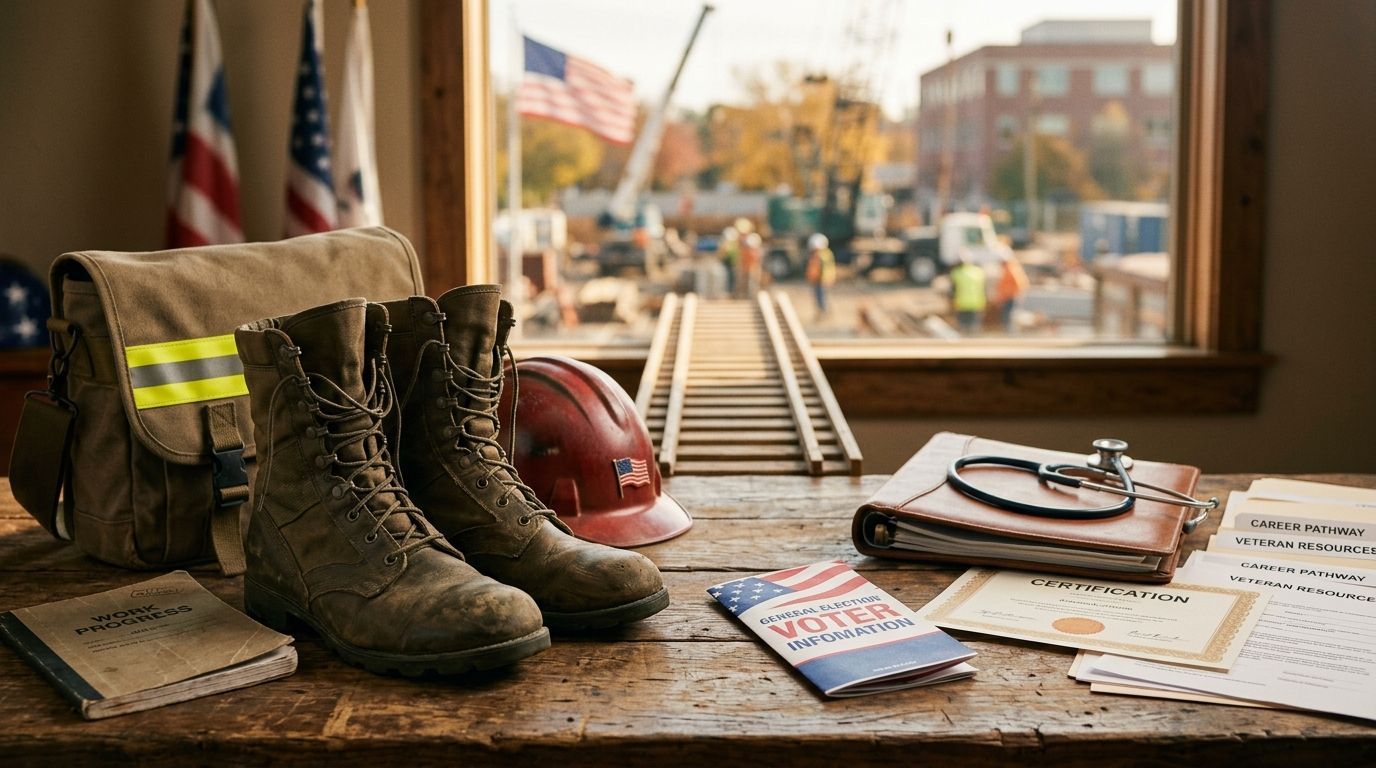
If you served in the military, you already have discipline, physical fitness, and the ability to work in demanding conditions. Several programs are designed to convert that experience into a construction career.
"Helmets to Hard Hats" connects veterans to apprenticeship opportunities across the building trades. The United Association's "Veterans in Piping" program goes further, offering training at military bases before service members even separate from active duty. Many programs award credit for prior military experience and give preference points during the application process.
The organizing work happening across supply chains and in sectors like tech shows that unions are growing in unexpected places. But the building trades remain the backbone of the labor movement's training infrastructure, and veterans are finding real careers there.
The Challenges Nobody Should Ignore
I'd be doing you a disservice if I painted this as a perfect system. It isn't.
Nationally, that sub-35% completion rate is a serious problem. Some of the reasons are structural: administrative burdens in the registration process, inconsistent support services, and programs that haven't updated their curricula in years. The Office of Apprenticeship is working to make registration more accessible online and develop flexible new models, but progress is slow.
Employer resistance is another issue. Robert I. Lerman of the Urban Institute has documented how some employers view apprenticeship programs as too costly, too specific, or too likely to lead to unionization. That last concern is telling. Some companies would rather hire undertrained workers at lower wages than invest in a system that also gives those workers collective bargaining power.
And then there's the cultural stigma. Despite everything the data shows, a huge number of parents and educators still view the trades as a step down from a desk job. That bias costs young people years of earning potential while they accumulate debt for degrees that may not lead to stable employment.
How to Get Started
If you're considering a trade apprenticeship, here's a practical roadmap:
Pick a trade that interests you. Electrical, plumbing, carpentry, ironwork, sheet metal, elevator construction, operating engineering. Research what the day-to-day work actually involves.
Find your local building trades council. Every major metro area has one, and they can connect you to specific union programs.
Look into pre-apprenticeship programs. If you don't have construction experience, these are your best entry point. NABTU's apprenticeship readiness programs operate across the country.
Check eligibility requirements. Most programs require you to be at least 18, have a high school diploma or GED, and pass a drug test and physical. Some trades have additional requirements like color vision tests for electricians.
Apply during open enrollment windows. Many programs accept applications only during specific periods. Check with your local joint apprenticeship training committee for dates.
Prepare for an aptitude test and interview. The application process is competitive. Treat it like you're applying for a well-paying professional position, because you are.
The Practical Takeaway
Union apprenticeship programs are not charity. They're not a consolation prize for people who couldn't afford college. They are carefully engineered career development systems that produce skilled professionals, build generational wealth, and give workers a genuine voice in their working conditions.
If you're 18 and trying to figure out what's next, or 35 and stuck in a job that's going nowhere, or a parent wondering what to tell your kid who hates school but loves building things: the skilled trades are hiring. The pay is real. The benefits are real. The career trajectory is real. And the unions that run these programs have been perfecting this model for over a century.
The only thing holding most people back is the idea that this path is somehow less than. Drop that assumption, and the math does the rest.
The Union Edge Staff
Also in the paper