
Workplace Safety Essentials Every Worker Should Know
Workers who get hurt on the job often knew something was wrong before it happened. They saw the frayed cable, smelled the chemical leak, noticed the missing guardrail. They just didn't know they had the legal right to say something about it, or they feared retaliation if they did.
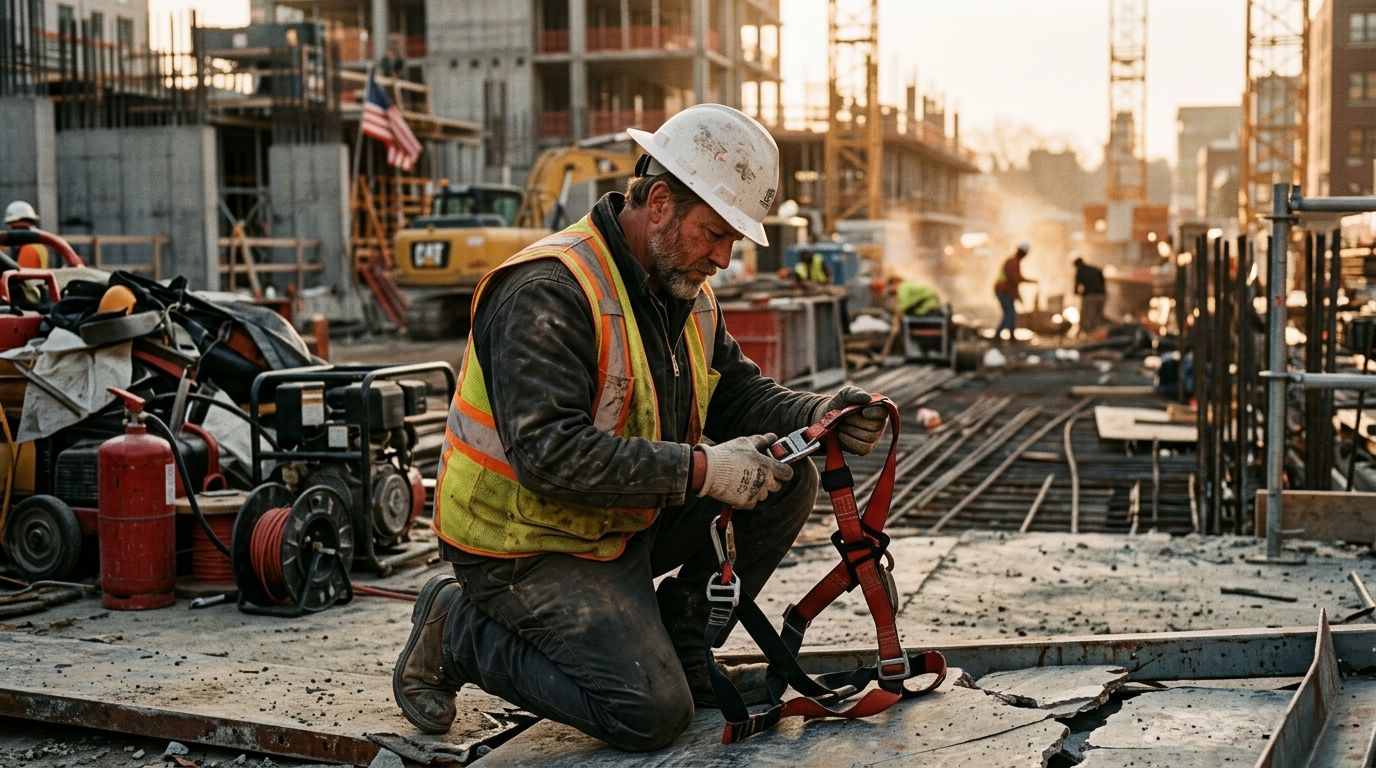
Workplace Safety Essentials Every Worker Should Know
Workers who get hurt on the job often knew something was wrong before it happened. They saw the frayed cable, smelled the chemical leak, noticed the missing guardrail. They just didn't know they had the legal right to say something about it, or they feared retaliation if they did. That gap between sensing danger and having the knowledge to act on it is where injuries happen. And it's entirely preventable.
Workplace safety isn't a poster on a break room wall. It's a set of enforceable legal rights, practical habits, and collective responsibilities that every single worker should understand before they clock in. Whether you're operating heavy machinery on a construction site, sitting at a desk for ten hours, or stocking shelves in a warehouse, these protections apply to you. Here's what you need to know.
You Have Federal Rights. Use Them.
This is the part that too many workers never learn: federal law guarantees you the right to a safe workplace. Full stop. Your employer must keep the workplace free from known safety and health hazards, and according to OSHA's own guidance on worker rights, you can speak up or report safety concerns without being punished or treated unfairly.
That last part is critical. Retaliation protections exist specifically because employers have historically punished workers who raised alarms. If your boss fires you, cuts your hours, reassigns you, or threatens you for reporting a hazard, that's a violation of federal law.
Your OSHA rights include:
The right to receive worker safety training in a language you understand
The right to file a confidential complaint with OSHA requesting a workplace inspection
The right to review records of workplace injuries and illnesses
The right to obtain copies of test results that monitor workplace hazards
The right to participate in an OSHA inspection and speak privately with the inspector
You can file a complaint with OSHA about safety and health conditions and, to the extent permitted by law, have your identity kept confidential from your employer. You don't need a lawyer. You don't need union representation, though it certainly helps to have it.
And here's something that surprises people: these rights apply whether you work for a Fortune 500 company or a ten-person landscaping crew. OSHA's recommended practices are designed for small and medium-sized businesses just as much as large ones. Size doesn't exempt anyone.
The Seven Things That Actually Prevent Injuries
OSHA's recommended practices break effective safety programs into seven core elements. I'm going to translate those from bureaucratic language into what they actually mean for you on the ground.
Management leadership. Your employer needs to treat safety as a real priority, not a checkbox. That means budgeting for proper equipment, responding to reported hazards promptly, and holding managers accountable when they cut corners.
Worker participation. You should be involved in identifying hazards and developing solutions. This is where worker voice in organizational decisions becomes more than an abstract principle. When workers help design safety protocols, those protocols actually get followed.
Hazard identification and assessment. Every worksite should have a systematic process for finding dangers before someone gets hurt. This includes regular walkthroughs, reviewing injury logs, and listening to workers who flag problems.
Hazard prevention and control. Once a hazard is identified, the employer must address it. The hierarchy goes: eliminate the hazard entirely, substitute something safer, use engineering controls, change work procedures, and then, as a last resort, provide personal protective equipment.
Education and training. Workers need to understand the hazards they face and the procedures that protect them. Generic safety videos don't count. Effective worker safety training is specific to the tasks you perform and the equipment you operate.
Program evaluation. Safety programs should be measured and improved over time. Near-miss reporting, safety audits, and tracking leading indicators all matter.
Communication and coordination. On multi-employer worksites, all parties need to share hazard information. The general contractor's safety plan means nothing if the subcontractor's crew never sees it.
Practical Safety Habits That Save Lives
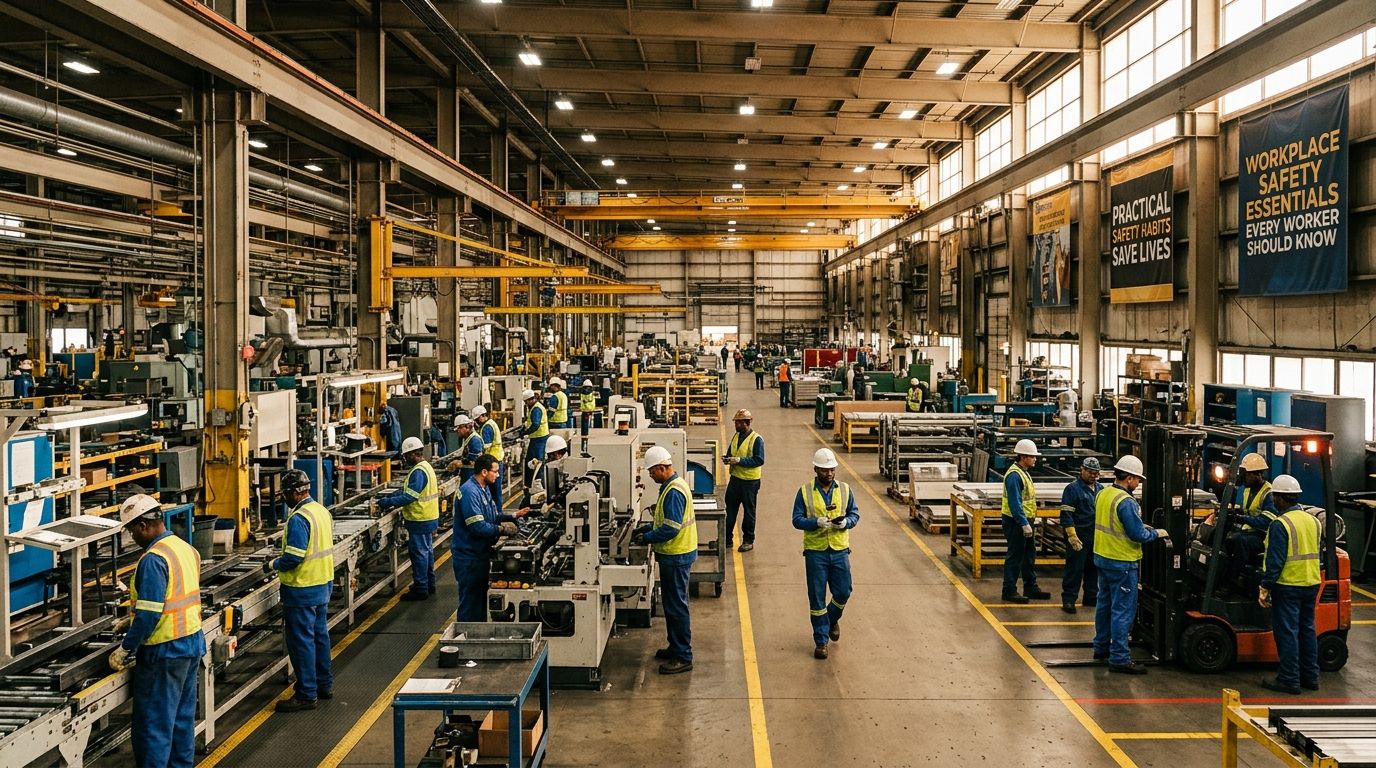
Rights and programs are the foundation. But day-to-day safety comes down to what you actually do on the job. According to workplace safety guidance from Indeed, here are essentials that apply across industries:
Know your equipment before you touch it. Note the appropriate safety gear for each task you perform. If you're unsure how to operate a machine, ask for training. Improperly used tools are one of the most common causes of workplace injuries.
Use mechanical aids. Choose a forklift, dolly, or wheelbarrow instead of your back. Encourage coworkers to do the same. Musculoskeletal injuries from improper lifting account for an enormous share of workers' compensation claims, and most are preventable.
Keep emergency exits clear. This sounds basic. It is basic. And yet in warehouse after warehouse, exit routes get blocked by pallets, equipment, and stored inventory. In an emergency, blocked exits kill people.
Label everything dangerous. Hazardous areas and materials need clear, visible labeling. If you encounter an unmarked chemical container or an unlabeled electrical panel, report it immediately.
Report near misses. A near miss is a free lesson. If a shelf nearly collapsed, if a forklift nearly struck someone, if a chemical nearly spilled, that information prevents the next incident from being an actual injury. Companies with strong safety cultures treat near-miss reports as valuable data, not nuisances.
Mental Health Is a Safety Issue Now
Here's a shift that's been building for years and is now impossible to ignore: psychological safety belongs in the same conversation as hard hats and harnesses.
A 2026 report from AlertMedia found that 48% of employees would grade their employer's focus on mental health a C or worse. Three out of four employees in surveyed businesses reported experiencing anxiety, depression, or fear that directly affected their job performance.
This isn't soft stuff. A distracted, exhausted, or anxious worker is a worker who makes mistakes. In physically demanding or high-risk environments, those mistakes can be fatal. Fatigue alone is a contributing factor in an estimated 13% of workplace injuries.
Good employers are starting to train managers to recognize signs of mental distress, scale back unrealistic production pressure, and integrate mental health resources into their safety programs. But workers shouldn't wait for employers to lead on this. If you're too exhausted to operate machinery safely, say so. If chronic understaffing is creating dangerous conditions, document it and report it.
The connection between working conditions and worker well-being is also central to why tech workers are pushing for collective representation. Safety isn't just about physical hazards. Burnout, harassment, and unsustainable workloads are workplace hazards too.
What to Do When Your Employer Ignores Safety
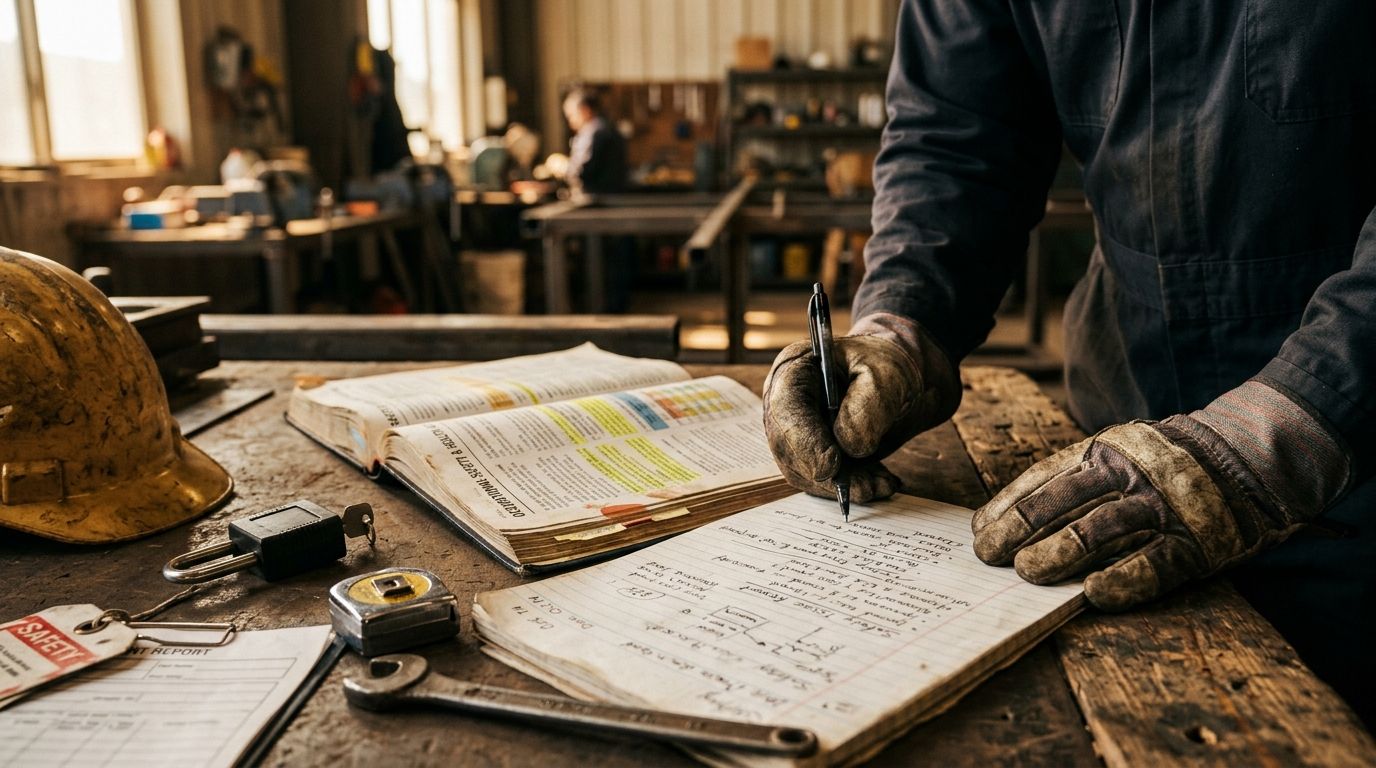
This is where theory meets reality. You've reported a hazard. Your supervisor shrugged. The unsafe condition persists. Now what?
Document everything. Dates, times, what you reported, who you reported it to, and what response you received. Written records, photos, and witness statements all matter.
Report to OSHA. You can file a complaint online, by phone, by fax, or by mail. Complaints can be filed confidentially. If OSHA determines there's reasonable cause, they'll inspect the workplace.
Talk to your coworkers. Collective action is protected under federal law. When multiple workers raise the same concern, it carries more weight and is harder for management to dismiss or retaliate against.
Contact your union. If you're represented, your union can file grievances, request inspections, and negotiate for safer conditions. If you're not represented, this might be the moment that changes. Unions in the trades, for example, run apprenticeship programs that build safety training into career development from day one.
Know your right to refuse dangerous work. Under very specific conditions, OSHA protects your right to refuse work if you believe you face imminent danger of death or serious injury. This is a narrow protection with specific legal requirements, so understand the criteria before invoking it.
Who Gets Hurt Most, and Why That Matters
Workplace safety isn't distributed evenly. According to Bureau of Labor Statistics data, the workers most likely to suffer serious injuries or fatalities are disproportionately in construction, agriculture, transportation, and warehousing. They're more likely to be men, immigrants, and workers of color. They're more likely to be in non-union workplaces.
Understanding who makes up the labor movement and who's most vulnerable helps explain why collective bargaining has historically been one of the most effective tools for improving safety outcomes. Unionized workplaces have lower injury rates not because the work is inherently safer, but because workers have contractual power to enforce safety standards.
A recent survey found that 75% of workers say they're more likely to stay with a company that prioritizes physical safety. That's not just a moral argument for better conditions. It's a business one. Turnover, workers' comp claims, and lost productivity from injuries cost employers billions annually.
Safety Is Collective, Not Individual
The most dangerous myth in workplace safety is that it's primarily about individual behavior. Wear your PPE. Lift with your legs. Stay alert. All true, all important, all insufficient.
The evidence consistently shows that organizational-level interventions reduce injuries more effectively than individual behavior change alone. Engineering controls, hazard elimination, adequate staffing, proper training, and worker participation in safety planning produce better outcomes than any number of "be careful" posters.
So yes, wear the hard hat. But also ask why the scaffolding isn't inspected. Ask why the night shift runs with half the crew the day shift has. Ask why the safety training was a twenty-minute video instead of hands-on instruction.
Your employer is legally required to provide a safe workplace. You're entitled to training in a language you understand. You can report hazards without fear of retaliation. And you are never obligated to risk your life for a paycheck.
Know your rights. Exercise them. And if you see something unsafe, say something. The worker standing next to you might be counting on it.
The Union Edge Staff
Also in the paper