
Environmental Justice Is a Labor Issue: Lessons from Flint
The people who told Flint, Michigan residents their water was safe to drink were not the people drinking it. That single fact contains everything you need to understand about why environmental justice labor fights and workplace safety struggles are the same fight wearing different clothes.
Environmental Justice Is a Labor Issue: The Hard Lessons Flint Taught Us All
The people who told Flint, Michigan residents their water was safe to drink were not the people drinking it. That single fact contains everything you need to understand about why environmental justice labor fights and workplace safety struggles are the same fight wearing different clothes. When an unelected emergency manager switched Flint's water source in 2014 to cut costs, the decision poisoned a city of nearly 100,000 people, most of them Black, many of them working-class. Twelve people died from Legionnaires' disease. Children were exposed to lead. And for over a year, officials insisted nothing was wrong.
I keep coming back to Flint because it demolishes the idea that environmental harm is separate from labor exploitation. They share a root cause: people with power treating certain communities as expendable.
What Actually Happened in Flint
The mechanics of the Flint water crisis are worth revisiting because the details reveal how deeply intertwined economic abandonment and environmental harm really are.
Flint was broke. The city was carrying a $25 million deficit when Michigan Governor Rick Snyder appointed an emergency manager to slash costs, as the NRDC's detailed account documents. This emergency manager was an unelected official with sweeping authority over local policy. That's a crucial detail. The people making decisions about Flint's infrastructure had zero accountability to the residents affected by those decisions.
The cost-cutting move that triggered the crisis was switching Flint's water supply from treated Lake Huron water (piped through Detroit) to the Flint River. The river water was corrosive. The city failed to add corrosion-control chemicals. Old lead pipes began leaching poison into the drinking water.
Residents noticed immediately. The water looked wrong, smelled wrong, tasted wrong. They complained. Officials told them it was fine.
It took concerned residents teaming up with independent researchers to prove what the community already knew. Virginia Tech scientist Marc Edwards tested the water and confirmed dangerous lead levels. Dr. Mona Hanna-Attisha at Hurley Medical Center showed that blood lead levels in Flint children had doubled, and in some neighborhoods tripled. Only then, in October 2015, did the city reconnect to the Detroit water system. A federal emergency was declared in January 2016.
Four government officials resigned. But the damage was done to an entire generation of kids who will carry the consequences in their bodies for life.
The False Choice Between Jobs and Environment
There's a persistent myth in American political life that workers must choose between good jobs and a clean environment. It's a lie, and it has a history.
As historian Josiah Rector has documented in his research on labor and environmental justice movements, union members have participated in environmental justice struggles from the Deep South to California's Central Valley, from Appalachia to Standing Rock. The framing of "jobs versus environment" only works if you ignore decades of shared organizing.
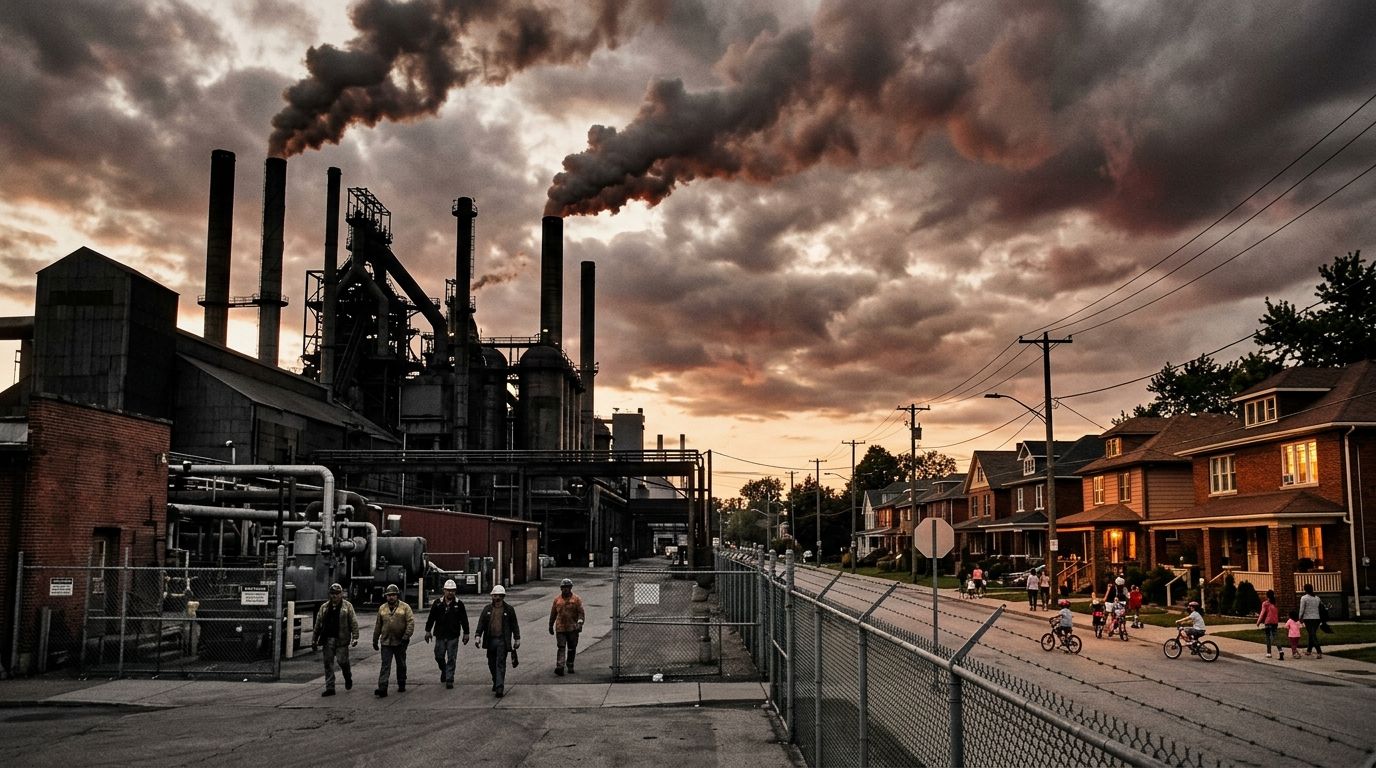
Think about it from a worker's perspective. The same factory that dumps toxins into a neighborhood's groundwater is usually exposing its own employees to those chemicals inside the plant. Auto workers in Michigan during the 1970s and 1980s fought for the right to equal protection from toxic hazards on the shop floor. They weren't environmentalists in any traditional sense. They were workers who didn't want to get cancer.
This connection between workplace hazards and community health isn't theoretical. Louisiana's "Cancer Alley" Chemical Corridor became a focal point for both labor and environmental justice organizing because the petrochemical plants there were simultaneously harming workers inside the fence line and residents outside it. During the 1984 BASF lockout, labor-environmental coalitions formed precisely because locked-out workers and poisoned neighbors realized they had the same enemy.
Environmental Racism Is the Thread That Ties It Together
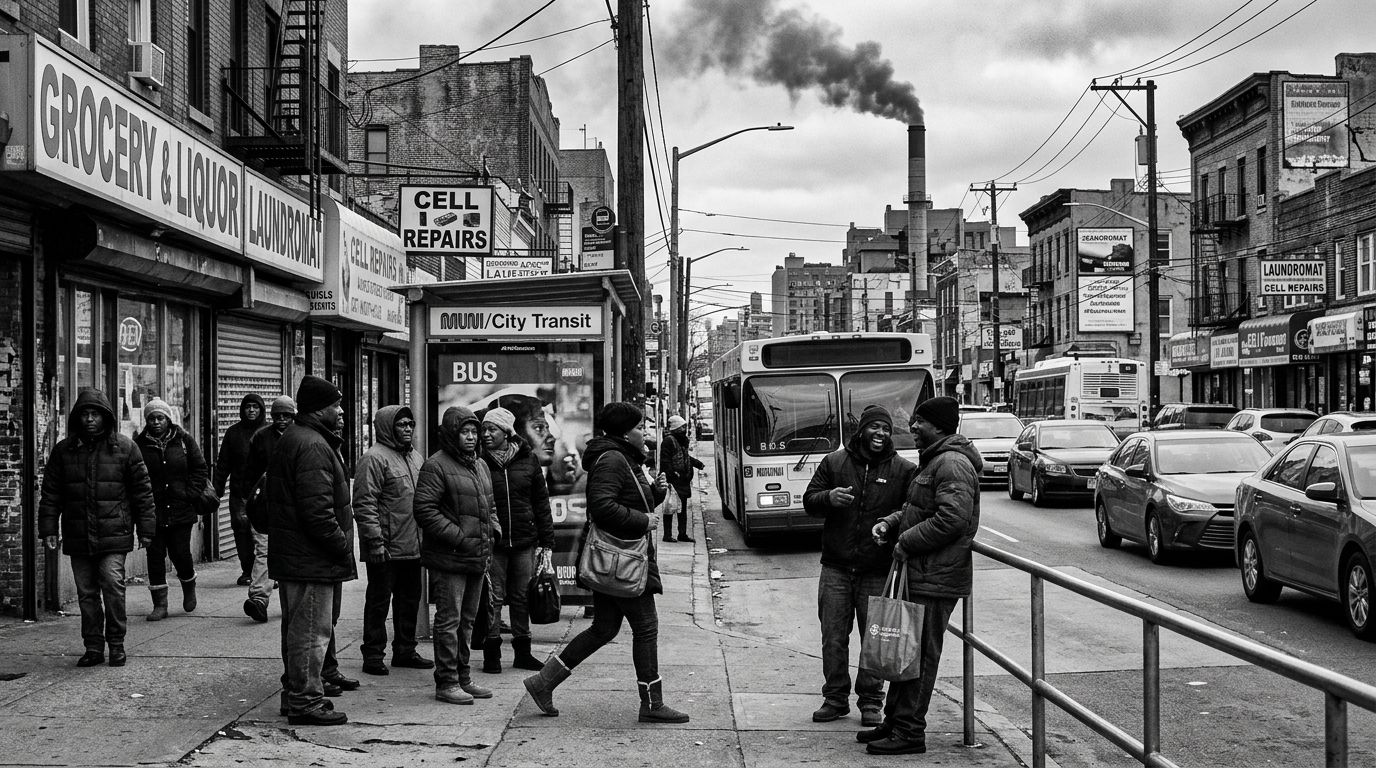
You cannot discuss the Flint water crisis without discussing race. Flint's population is roughly 54% Black. The city's median household income sits well below the national average. These demographics aren't incidental to what happened. They're central.
The concept of environmental racism describes how communities of color and low-income neighborhoods bear a disproportionate burden of pollution, toxic waste, and environmental neglect. Flint is a textbook case, examined in academic research at Fordham that frames the crisis through the intersection of race and pollution of ecosystem services.
Dr. Robert Bullard, widely considered the father of environmental justice, has identified five principles for achieving equity: guaranteeing the right to environmental protection, preventing harm before it occurs, shifting the burden of proof to polluters, eliminating the requirement to prove discriminatory intent, and redressing existing inequities. Every single one of these principles was violated in Flint.
And here's what connects this directly to labor: the workers most likely to live in environmentally burdened communities are the same workers most likely to hold dangerous, low-wage jobs. They face toxins at work and toxins at home. The compounding effect is brutal. When we talk about how workplace stress affects families, environmental contamination belongs in that conversation. A parent working a physically demanding job who comes home to a house with lead-contaminated water isn't facing two separate problems. It's one crisis with two fronts.
The pattern repeats everywhere you look. The communities fighting coal ash ponds, chemical plants, and incinerators are overwhelmingly Black, Latino, Indigenous, and poor. These are the same communities where unions have historically struggled for a foothold, where immigration enforcement destabilizes working families, and where public services are chronically underfunded.
The Department of Labor's Role (And Its Limits)
The U.S. Department of Labor has its own Environmental Justice Strategy, which explicitly connects worker health and safety with environmental protection. The strategy focuses on protecting low-income, minority, and Native American workers from environmental hazards, including through job training programs in environmental cleanup and remediation.
This is good on paper. But Flint exposed the gap between policy frameworks and actual protection. When the crisis was unfolding, the government agencies responsible for protecting residents were the very ones dismissing their complaints. The Michigan Department of Environmental Quality actively downplayed the contamination. The EPA knew about problems and failed to act with urgency.
The lesson for workers and organizers is uncomfortable but necessary: regulatory agencies are only as effective as the political will behind them. When that will evaporates, or when emergency managers override local democratic processes, the formal structures meant to protect people become hollow.
This is why the labor movement's involvement in environmental justice isn't charity or solidarity tourism. It's self-preservation. Unions bring organizational infrastructure, legal resources, and political power that community groups often lack on their own. During the Flint crisis, the Amalgamated Transit Union, National Nurses United, and the Labor Coalition for Community Action all stepped up, installing water filters, providing low-cost loans for pipe replacement, and advocating for health protections.
What Flint Residents Got Right

One of the most important parts of this story is what Flint residents did for themselves. They didn't wait for institutions to save them. They organized.
Groups like We the People of Flint began collecting their own data in 2015, gathering personal health experiences, water quality observations, and household information through surveys and digital platforms. This grassroots data collection was instrumental in challenging official narratives. It validated what residents already knew and provided the evidence base that eventually forced government action.
This approach built on something called Community-Based Participatory Research, which Flint had a foundation in dating back to the 1990s through the W.K. Kellogg Foundation's Community Based Public Health Initiative. The model emphasizes equitable partnerships between academics and residents, treating community members as co-investigators rather than subjects.
There's a direct parallel to how unions function at their best. A shop steward documenting safety violations on the factory floor is doing the same essential work as a Flint resident collecting water samples. Both are saying: we know something is wrong, and we're going to prove it because nobody in charge is going to do it for us.
The labor movement has deep experience with exactly this kind of organizing, and the history of how unions reduce workplace injuries is built on the same foundation of worker-led documentation and collective action.
The New Frontier: Tech, Climate, and Cross-Movement Solidarity
Environmental justice labor organizing isn't stuck in the past. It's evolving. The AI Now Institute has documented how labor organizers are beginning to connect environmental justice with tech worker organizing, particularly around the environmental footprint of data centers and AI infrastructure. Cross-supply-chain solidarity is emerging between environmental justice movements and worker-led grassroots organizations.
This matters because the industries driving economic growth are also driving enormous energy consumption and environmental harm. Data centers consume massive amounts of water for cooling. E-waste piles up in communities of color overseas. The minerals in your phone were mined under conditions that would be illegal in the U.S.
Workers inside these industries have unique power. When employee-led groups push back against corporate greenwashing and demand real accountability for environmental impact, they're carrying forward the same tradition as the auto workers in Michigan who refused to accept toxic exposure as the price of a paycheck.
What Workers and Organizers Should Take From This
Flint didn't happen because of one bad decision. It happened because of a system designed to prioritize cost savings over human life, especially when the humans in question were poor and Black. The emergency manager model stripped away democratic accountability. The regulatory agencies failed. The political establishment looked away until it couldn't.
Here's what's practical and actionable:
Environmental issues are bargaining issues. If your workplace or community faces environmental hazards, those belong on the negotiating table. Air quality, water contamination, chemical exposure: these affect workers on and off the clock.
Data is power. Flint residents proved that community-collected evidence can break through institutional denial. Workers can do the same by documenting conditions, filing complaints, and building records that regulators can't ignore.
Coalitions work. The most effective fights bring together unions, community organizations, and researchers. No single group has all the resources needed. The 2016 Flint Water Advisory Task Force, which concluded the crisis was a result of environmental injustice, led to 33 formal recommendations including the establishment of an environmental justice ombudsman in Michigan.
Democratic control matters. Flint's emergency manager had power without accountability. Protecting local democratic processes, including the right of communities to make decisions about their own infrastructure, is a labor issue.
The Flint water crisis wasn't an anomaly. Paul Mohai, a University of Michigan environmental justice researcher, has called it "the most egregious example of environmental injustice" in over three decades of study. But the patterns that produced it exist in hundreds of communities across the country, places where the water is bad, the air is foul, the jobs are dangerous, and the people with the most to lose have the least say in what happens next.
Environmental justice is a labor issue because the people getting poisoned and the people getting exploited are, overwhelmingly, the same people. Any labor movement that ignores this is leaving its most vulnerable members behind. And any environmental movement that ignores workers is missing its most powerful potential allies.
The work isn't to build bridges between separate movements. It's to recognize that the bridge was always there. Flint showed us that. The question is whether we're willing to walk across it together.
The Union Edge Staff
Also in the paper