
U.S. Employers Spent $1.7 Billion Fighting Unions in 2025 as Membership Hits 16-Year High
U.S. employers spent an estimated $1.7 billion in 2025 hiring consultants and attorneys to oppose union organizing efforts, according to a study released Tuesday by union-busting watchdog LaborLab and the Economic Policy Institute, even as union membership climbed to 16.5 million workers—the highest
U.S. Employers Spent $1.7 Billion Fighting Unions in 2025 as Membership Hits 16-Year High
U.S. employers spent an estimated $1.7 billion in 2025 hiring consultants and attorneys to oppose union organizing efforts, according to a study released Tuesday by union-busting watchdog LaborLab and the Economic Policy Institute, even as union membership climbed to 16.5 million workers—the highest total in 16 years.
The spending estimate encompasses attorney services for representation and consulting, plus non-attorney consultants who work to prevent union elections, persuade workers to vote against unionization, stall collective bargaining negotiations, and exploit National Labor Relations Board procedural delays. The analysis comes from LaborLab, which tracks employer anti-union activities, and the Economic Policy Institute, a progressive think tank focused on labor policy.
The $1.7 billion figure represents disclosed spending only. Under the Labor-Management Reporting and Disclosure Act, employers must report money spent on consultants hired to persuade or dissuade employees from organizing, but a broad "advice" exemption allows most consulting work to avoid disclosure. EPI estimates that if most advice services were included, employers spend $442 million per year on anti-union campaign services alone, separate from legal representation costs.
Union Membership Rises Despite Corporate Opposition
Union membership increased by 463,000 workers in 2025, bringing the total to 16.5 million—10 percent of the U.S. workforce. The growth occurred despite sustained employer opposition and follows decades of decline from unionization's 1954 peak, when one in three American workers belonged to a union.
The App Drivers Union in Massachusetts became the first statewide rideshare union this week, representing nearly 70,000 Uber and Lyft drivers. More than 3,200 union election petitions were filed in 2024, according to LaborLab data cited in the study, though only 153 employers filed required financial disclosures about hiring union consultants that year.
Separate LaborLab research found that more than 70 percent of employers hire consultants when workers attempt to organize. The gap between 153 disclosure filings and 3,200 election petitions demonstrates widespread underreporting, the study's authors concluded.
How Employers Deploy Anti-Union Consultants
Consultants work to prevent union elections from occurring and, when elections proceed, to secure worker votes against unionization. "In a lot of cases, employers could take the money that they choose to spend on these consultants and attorneys, and rather than spend it on their workers in the form of a decent raise and a first contract," said Teke Wiggin, strategic coordinator at LaborLab and one of the study's authors. "Instead of doing what they're doing, they could recognize the union and negotiate a decent first contract, and they would often be spending the same amount of money."
The consulting industry's strategies extend beyond election campaigns. Firms advise employers on delaying NLRB proceedings, challenging bargaining unit compositions, and prolonging first-contract negotiations. The union-busting consulting industry has grown into a sophisticated sector with specialized tactics for different industries and workforce types.
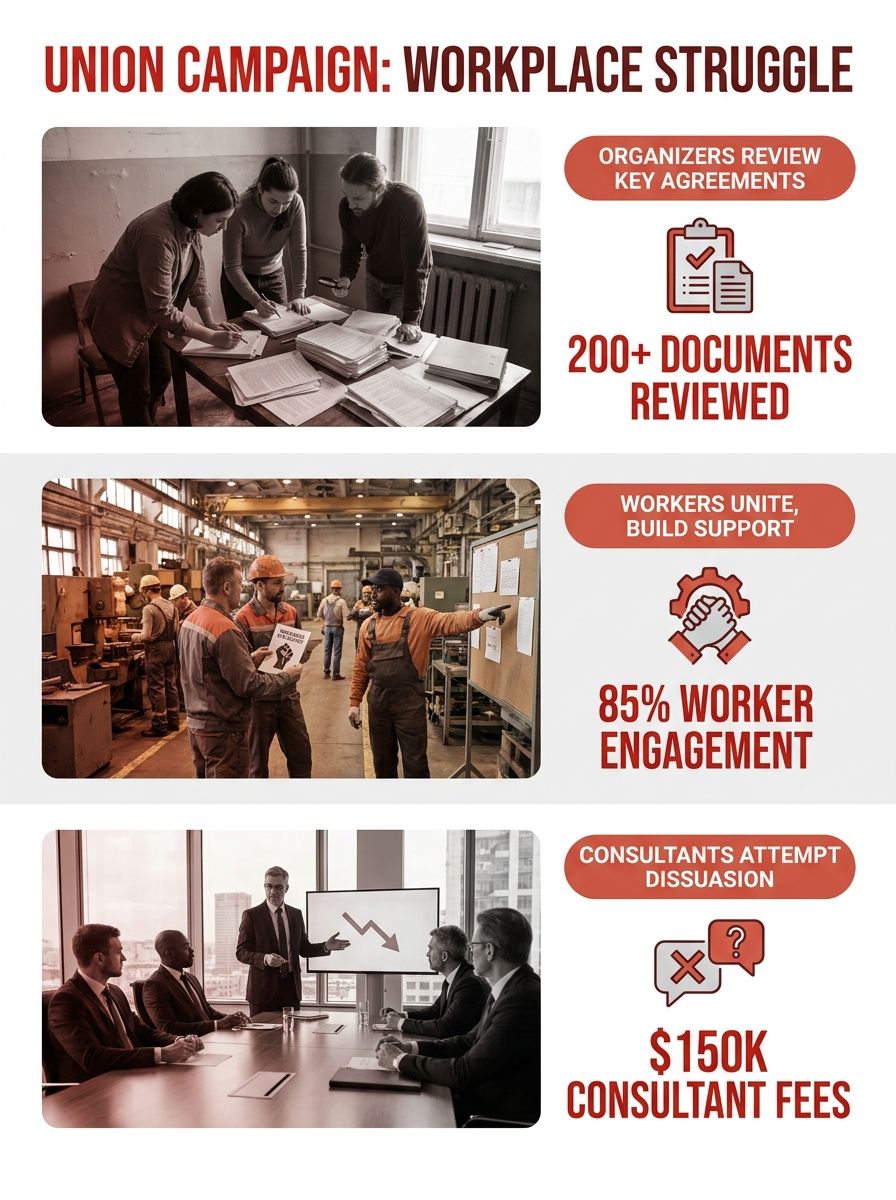
Amazon Tops Spending List
Amazon reported spending $26 million on union consultants in 2025, making it one of the highest spenders identified in the study. The company paid anti-union consulting firm The Rayla Group more than $5 million, according to its 2025 LM-10 union consultant expenditure report filed with the Department of Labor.
An Amazon spokesperson told Fortune the company has invested more than $1 billion annually to raise pay and lower health care costs for U.S. fulfillment and transportation employees. "External groups spent an extraordinary amount of time and money to spread misinformation—frequently and illegally lying to, or intimidating our teammates and partners," said Sam Stephenson, Amazon spokesperson. "It's important that our teammates and partners understand the truth, so we've continued to work with experts in the field who are able to share objective facts about what it actually means to have an external party take their voice."
Unionized jobs typically provide higher wages and better benefits, which employers bear the cost of providing. President Donald Trump signed an executive order ending collective bargaining with federal labor unions in 2025, eliminating union representation for hundreds of thousands of federal workers.
What Happens Next
The disclosure gap identified in the study gives organizing campaigns incomplete intelligence about employer spending and consultant deployment. LaborLab's database tracks known anti-union consultants, but the LMRDA's advice exemption allows most consulting relationships to remain hidden until employers choose to disclose them—or until consultants appear at worksites.
Union organizers can use the $1.7 billion figure to frame employer opposition as a strategic resource allocation choice rather than an inevitable response to organizing. The study's finding that employers could fund first contracts with the money currently spent on consultants provides a concrete talking point for bargaining committees and authorization card campaigns.
The 463,000-member increase demonstrates organizing momentum despite employer spending. Campaigns in new sectors—rideshare drivers, tech workers, architecture firms—suggest the rising membership trend may continue even as corporate anti-union budgets grow. Organizers should anticipate consultant involvement in campaigns at mid-size and large employers and plan counter-strategies accordingly, particularly around NLRB procedural delays and first-contract stalling tactics that consultants routinely deploy.
The Union Edge Staff
Related Articles
The $1.5 Billion Union-Busting Industry: How Employers Weaponize Legal Consultants and What Unions Should Know
Anti-union law firms, third-party persuader consultants, and employer-run internal campaigns form the three pillars of a $1.7 billion annual industry dedicated to stopping workers from organizing.
LaborLab Releases Tools to Track Union-Busting Campaign Costs as Employers Evade Disclosure Law
LaborLab, a workers' rights watchdog organization, released a search tool and cost estimator on September 8 designed to expose the spending patterns of the $1.7 billion union-busting industry, according to The American Prospect.
US Union Membership Rose by 411,000 Workers in 2025, With Most Gains in States Protecting Collective Bargaining
Union membership in the United States increased by 411,000 workers in 2025, the largest single-year gain since 2008, with nearly three-quarters of new members concentrated in states that legally protect collective bargaining rights, according to a report released September 7, 2026, by the Illinois E
Also in the paper