
How Unions Reduce Workplace Injuries and Save Lives
The single most effective piece of safety equipment on any job site isn't a hard hat, a safety line, or a pair of steel-toed boots. It's a union card. That's not rhetoric.
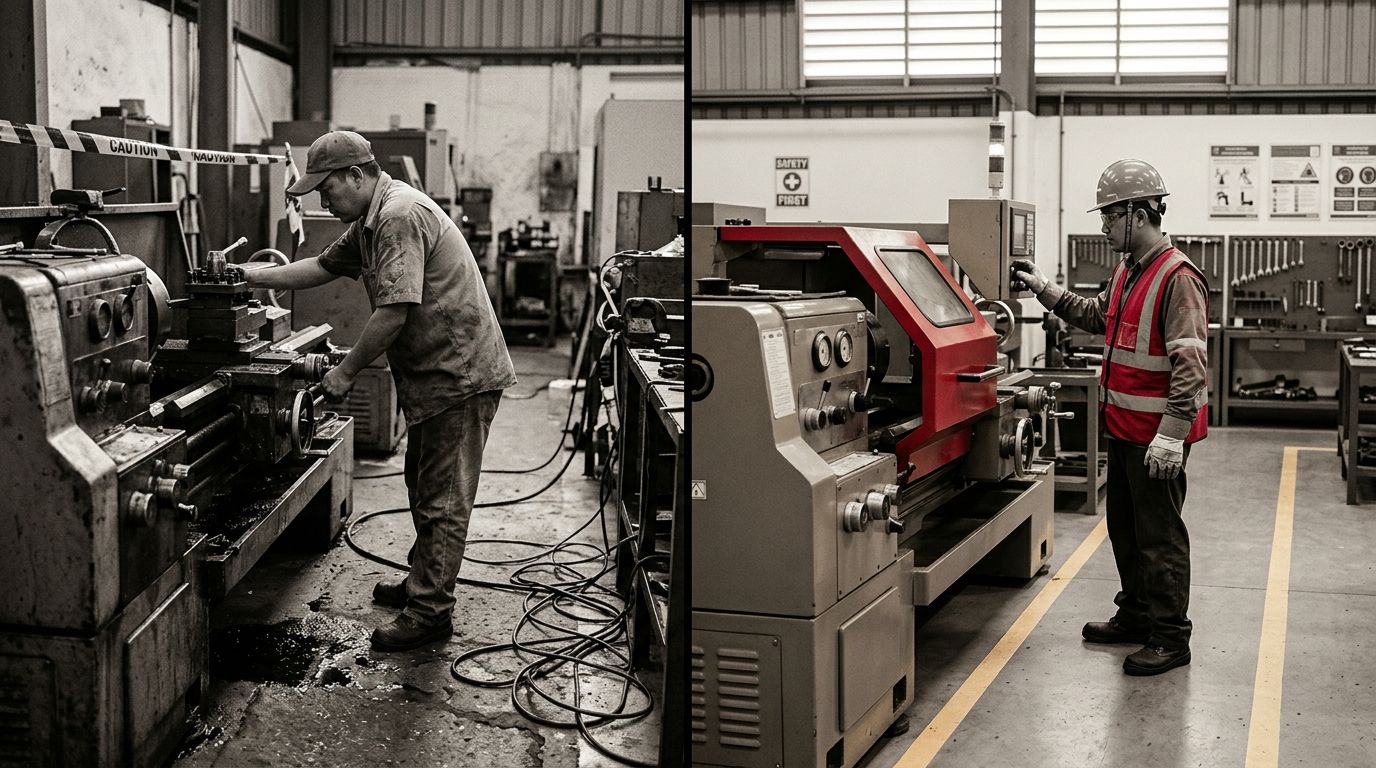
How Unions Reduce Workplace Injuries and Save Lives
The single most effective piece of safety equipment on any job site isn't a hard hat, a safety line, or a pair of steel-toed boots. It's a union card. That's not rhetoric. A Department of Labor analysis found that unionization is associated with a 13 to 30 percent drop in traumatic injuries and a 28 to 83 percent reduction in fatalities, depending on the industry. Those aren't small margins. Those are the kinds of numbers that separate workers who go home at the end of the shift from workers who don't.
I've spent years writing about workplace conditions, talking to organizers, and reading the research. And the pattern is impossible to ignore: union injury rates are consistently, measurably lower than non-union injury rates. Not because unionized workers are inherently more careful. Because the systems around them are designed to keep them alive.
The Numbers Don't Lie
Before we talk about why organized labor safety matters, let's anchor this in data.
A widely cited study published in BMJ Occupational & Environmental Medicine found that a one percent decline in unionization is associated with a five percent increase in occupational fatality rates. Read that again. A tiny dip in union density corresponds to a significant spike in deaths. Across U.S. states from 1992 to 2016, a one-percentage-point increase in unionization correlated with a 2.8 percent decline in workplace fatality rates.
In coal mining, one of the most dangerous industries in the country, unionized operations experienced 14 to 32 percent fewer traumatic injuries and 29 to 83 percent fewer fatalities compared to non-union mines. A Canadian study of over 40,000 construction firms found that unionized workers had 23 percent fewer lost-time injury claims and were nearly 30 percent less likely to suffer critical injuries. They also experienced 17 percent fewer musculoskeletal injuries.
These aren't cherry-picked findings from a single friendly researcher. They come from peer-reviewed journals, government reports, and cross-national datasets. The evidence base is deep.
Why Unions Make Workplaces Safer
So what's actually happening on the ground? Why do unions and workplace safety go hand in hand? The mechanisms are concrete and well-documented.
Workers Can Speak Up Without Getting Fired
This is the big one. Every workplace safety program in the world depends on one thing: workers reporting hazards before someone gets hurt. But reporting a hazard in a non-union shop means risking your paycheck. You flag a broken guardrail, and suddenly you're "not a team player." You refuse to operate a machine with a busted safety interlock, and your hours get cut.
Unions change that calculus completely. When you have a contract that protects you from retaliation, you report the broken guardrail. You refuse the unsafe assignment. You file the complaint. This culture of transparency, as the Economic Policy Institute has noted, leads to earlier identification and correction of dangerous conditions.
If you're just getting started thinking about what protections workers should expect, understanding the fundamentals of workplace safety is a good foundation. But protections on paper mean nothing without the power to enforce them. That's what a union provides.
Collective Bargaining Goes Beyond Federal Minimums
The AFL-CIO puts it plainly: through organizing and collective bargaining, unions have gained protections that go well beyond what federal law requires. The labor movement fought to pass the Occupational Safety and Health Act of 1970 and the Federal Mine Safety and Health Act. But OSHA sets a floor, not a ceiling. Union contracts routinely negotiate standards that are stricter than what OSHA mandates.
A CPWR survey of over 3,000 construction firms showed this in sharp detail. Eighty percent of union contractors conduct hazard analyses before projects begin, compared to 56 percent of non-union firms. Eighty-seven percent implement site-specific safety plans, versus 69 percent of non-union contractors. Union firms designate competent safety personnel more frequently (76 percent vs. 62 percent) and investigate near-misses more often (67 percent vs. 50 percent).
That last number matters enormously. Near-miss investigations are the early warning system of workplace safety. Every fatal accident is preceded by dozens of near-misses that nobody tracked. Unions make tracking them part of the job.
Safety Committees With Real Power
Many non-union workplaces have safety committees. They meet quarterly, someone takes notes, and nothing changes. Union safety committees are different because they have contractual authority. Joint labor-management safety initiatives produce real results. At Nestlé, for example, a union-management plan reduced slip-related injuries by 60 percent and manual handling injuries by 40 percent over three years.
Daily toolbox talks, a staple of unionized job sites, have been associated with up to a 76 percent reduction in Total Recordable Injury Rates. That's not a typo. When workers start every shift with a brief, focused conversation about the specific hazards they'll face that day, injuries plummet.
Better Benefits Mean Healthier Workers
This one gets overlooked. Research highlighted by the Scholars Strategy Network shows that unionized workplaces tend to have better health insurance, which improves overall worker health and reduces stress about medical expenses. A worker who skips a doctor's appointment because they can't afford the copay is a worker who shows up impaired, distracted, or physically compromised. Unions address the upstream conditions that make injuries more likely.
In healthcare specifically, unions improve safety not just for workers but for patients. Research shows that unions secure safe nurse-to-patient staffing ratios, more paid sick leave, and reduced worker turnover. When nurses aren't stretched across twice as many patients as they can safely manage, mistakes drop. People live.
The Construction Industry: A Case Study
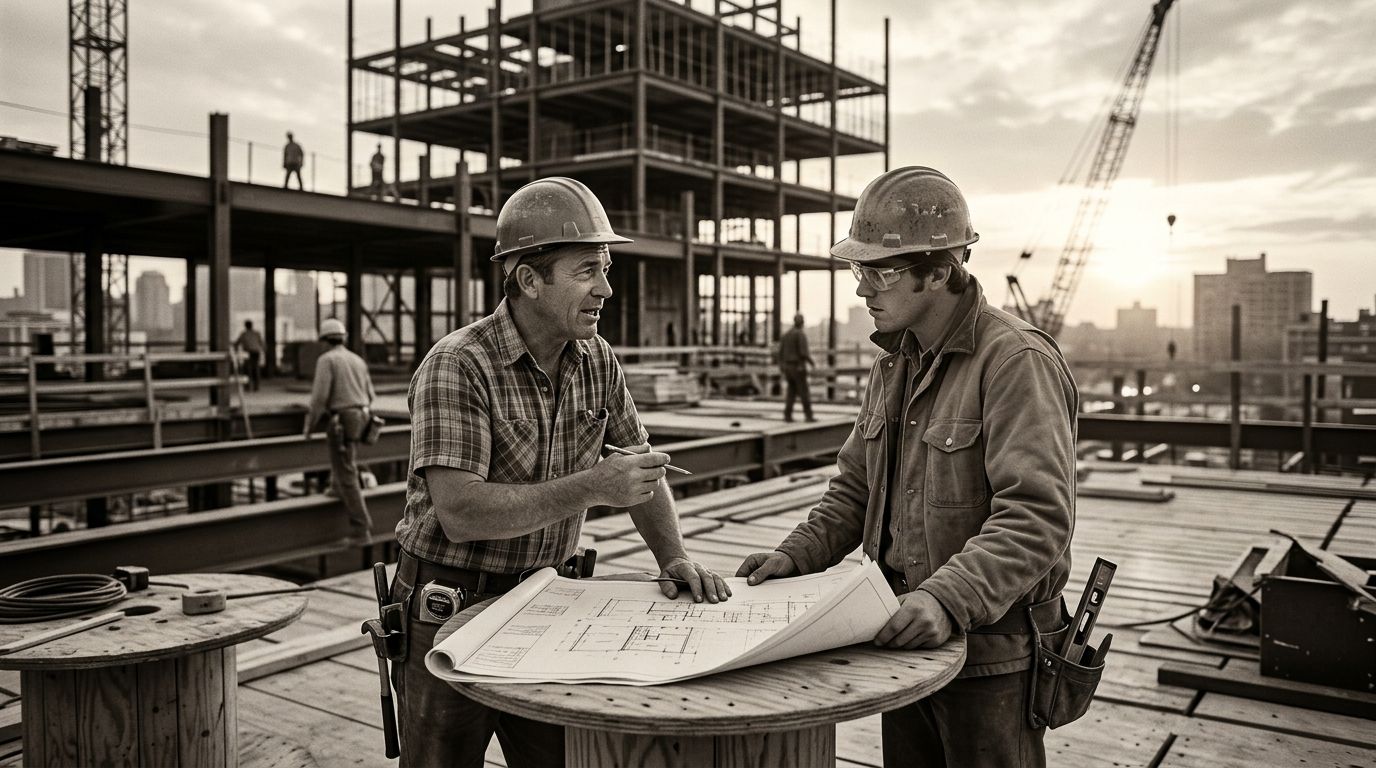
Construction deserves special attention because it's where the stakes are highest and the evidence is clearest.
OSHA data shows that union worksites have 34 percent fewer violations per inspection than non-union sites. Union contractors are 20 percent more likely to use prevention-through-design practices, which means they're eliminating hazards during the planning phase rather than slapping up warning signs after someone gets hurt.
The difference shows up in apprenticeship programs too. Union training programs don't just teach you how to do the work. They teach you how to do the work without killing yourself. If you're curious about how these programs operate, the structure of union apprenticeships is worth understanding. A four- or five-year apprenticeship with embedded safety training produces a fundamentally different worker than a two-week orientation followed by "watch the other guy and figure it out."
In states with right-to-work laws, which weaken unions by allowing workers to opt out of paying dues, the contrast is stark. Kansas, Missouri, and Nebraska all saw notable increases in workplace deaths due to falls, machine hazards, and struck-by hazards. Nationally, right-to-work laws are associated with a 14.2 percent increase in occupational fatalities. Weaken the union, and workers die.
The COVID-19 Stress Test
The pandemic provided an unplanned natural experiment in unions and workplace safety. When the virus hit and essential workers had no choice but to show up, unionized workplaces adapted faster and protected workers better.
In New York nursing homes, union representation was associated with 30 percent lower resident mortality from COVID-19. That's partly because unionized staff had better access to N95 respirators and proper training when they were redeployed to unfamiliar units. Unionized essential workers across industries had greater access to personal protective equipment, paid sick leave, and regular testing.
Paid sick leave deserves its own paragraph. When non-union workers get sick, many face a brutal choice: go to work infectious or lose income. During a pandemic, that choice becomes lethal, not just for the worker but for everyone around them. Union contracts that guarantee paid sick days aren't a perk. They're a public health intervention.
The Counterargument, Addressed Honestly

I want to be fair here. Some research has found that unionized workers report more nonfatal injuries than non-union workers. A 2015 study by Alejandro Donado explored this and found that controlling for individual fixed effects reduced the gap by about 40 percent. The remaining difference likely reflects the fact that union workers are more willing to report injuries, not that they experience more of them.
This is a crucial distinction. In non-union shops, underreporting is rampant. Workers don't file claims because they fear retaliation, don't know their rights, or have been pressured by management to keep the recordable injury rate down. When you see a non-union workplace boasting about its perfect safety record, be skeptical. A culture of silence isn't the same as a culture of safety.
Who Benefits Most
The safety effects of unionization aren't evenly distributed across the workforce. They're strongest in the most dangerous industries: construction, mining, manufacturing, healthcare. They're strongest for the workers with the least individual bargaining power. Understanding who belongs to unions helps explain why certain communities benefit disproportionately from organized labor safety protections.
Older adults with long-term union membership report better overall health, fewer chronic conditions, and less functional limitation. That's the cumulative effect of decades of safer working conditions, better healthcare access, and less physical wear on the body. The benefits compound over a career.
Why These Numbers Matter for Your Workplace
If you work in a dangerous industry and you're not unionized, the research is clear: you face significantly higher risks of injury and death than your unionized counterparts. That's not opinion. That's what the data shows across multiple countries, industries, and decades of study.
If you're already in a union, use your safety committee. Report near-misses. Push for stronger contract language on hazard elimination, not just hazard mitigation. Show up to meetings. The protections only work if workers actively exercise them.
And if you're an employer reading this, consider what these numbers mean for your bottom line. Workplace injuries are expensive. Workers' comp claims are expensive. Turnover from burned-out, injured workers is expensive. The research suggests that unions don't just make workers safer; they make safety programs actually function the way they're supposed to. Eighty percent of union contractors doing pre-project hazard analyses versus 56 percent of non-union firms isn't a union tax — it's evidence that organized labor creates the conditions for effective safety management.
The evidence on this topic is about as settled as it gets in social science. Unions reduce workplace injuries. Unions save lives. The debate isn't really about whether that's true. It's about whether we're willing to act on it.
The Union Edge Staff
Also in the paper